Automated Farming: The Future of Efficient and Sustainable Agriculture
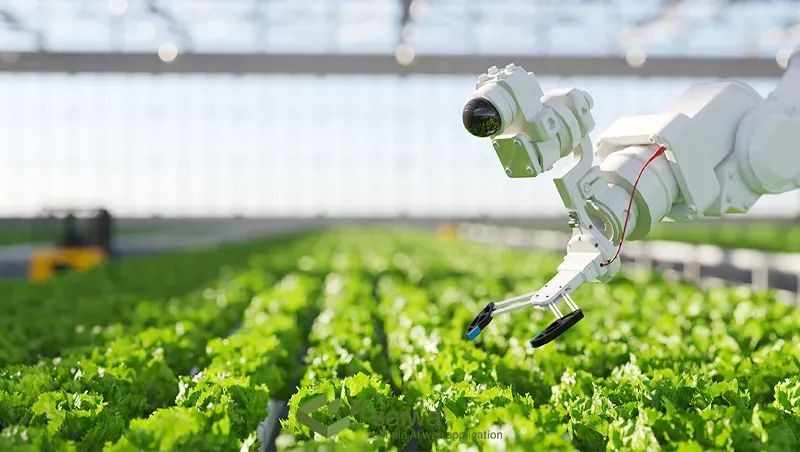
The agricultural industry is undergoing one of the most significant
transformations in its history. Population growth, climate challenges, labor
shortages, and rising demand for food have pushed farmers to seek smarter, more
efficient solutions. This has given rise to Automated Farming,
a technological revolution that uses robotics, artificial intelligence, machine
learning, sensors, and advanced machinery to perform farming tasks with minimal
human intervention.
Automated systems enable farmers to increase productivity, reduce labor
dependence, and improve sustainability. By integrating intelligent machines and
data driven decision making, farms are becoming more resilient and efficient.
What Is Automated Farming?
Automated Farming refers to the use of technology and robotics to perform
agricultural operations such as planting, irrigation, fertilization,
monitoring, harvesting, and livestock management. These systems operate
independently or with very limited human input.
Examples of automation in agriculture include:
- Autonomous tractors
- Drone based crop monitoring
- Robotic harvesters
- AI enabled irrigation systems
- Automated weeding machines
- Livestock monitoring sensors
- Greenhouse climate control
systems
The goal is to improve accuracy, reduce costs, and maximize output while
protecting the environment.
Why Automated Farming Matters
Farmers worldwide face increasing challenges:
- Labor shortages in rural areas
- Rising costs of manual farming
- Climate variability affecting
crop cycles
- Growing global demand for food
- Pressure to reduce chemical input
and water usage
Automated Farming provides solutions to these challenges by enabling
continuous monitoring, precision input application, and more efficient resource
use.
Key Technologies Powering Automated
Farming
Several advanced technologies form the backbone of Automated Farming:
1. Robotics
Agricultural robots can plant seeds, spray fertilizers, harvest crops,
and remove weeds with high precision. They reduce labor dependence and improve
consistency.
2. Artificial Intelligence
AI helps analyze real time data from fields, monitor plant health, detect
diseases, and make recommendations. Companies like Saiwa use AI to analyze drone and sensor
data, supporting automation decisions with accurate insights.
3. Internet of Things (IoT) Sensors
Soil moisture sensors, weather stations, and crop health sensors collect
continuous data. Automated systems use this information to adjust irrigation or
nutrient supply.
4. Drones
Drones play a major role in Automated Farming by scanning fields,
detecting issues, mapping variability, and supporting targeted spraying.
5. GPS and Mapping Systems
GPS enabled tractors and equipment perform operations with centimeter
level accuracy, reducing waste and overlapping.
6. Software Platforms
Farm management platforms integrate data from sensors, machinery, and
drones into a single dashboard. Farms using platforms like Saiwa can automate
decision making with minimal effort.
Applications of Automated Farming
Automation is transforming agriculture across multiple operations.
1. Automated Planting
Precision seeders place seeds at the exact depth and spacing needed. This
increases germination rates and reduces seed waste.
2. Smart Irrigation
AI powered irrigation systems deliver water only when and where it is
needed. Soil moisture data and weather forecasts help optimize use, preventing
overwatering and improving crop health.
3. Automated Crop Monitoring
Drones and sensors monitor crops continuously, identifying disease
symptoms, nutrient deficiencies, or temperature stress early. This helps
farmers act before damage spreads.
4. Robotic Harvesting
Robotic arms and autonomous harvesters can pick fruits, vegetables, and
grains with speed and precision. They operate day and night, reducing labor
constraints during peak seasons.
5. Automated Weed Management
Robots equipped with cameras and AI identify and remove weeds without
damaging crops. Some machines use precise chemical application, while others
use mechanical removal.
6. Livestock Monitoring
Cameras and sensors track animal movement, feeding habits, and health
conditions. Automated systems alert farmers when animals need attention,
ensuring early care.
Benefits of Automated Farming
The advantages of adopting Automated Farming are substantial:
- Increased productivity: Machines work faster and more
accurately than manual labor.
- Reduced costs: Automation lowers labor expenses
and minimizes input waste.
- Higher quality crops: Precision agriculture delivers
optimal conditions for plant growth.
- Improved sustainability: Less water, chemicals, and fuel
are used.
- Continuous monitoring: Real time insights enable fast
decisions.
- Better resilience: Automation supports consistent
output despite climate or labor challenges.
These benefits empower farmers to scale operations and meet growing food
demands.
Challenges in Automated Farming
While automation offers great promise, there are obstacles:
- High initial equipment cost
- Limited technology access in
remote regions
- Need for digital training and
technical skills
- Connectivity issues in rural
areas
- Equipment maintenance and repair
costs
Despite these challenges, the long term return on investment is
significant, and costs continue to decrease as technology advances.
Automated Farming and Sustainability
Sustainability is one of the biggest drivers behind automation. Automated
Farming helps reduce environmental impact by:
- Lowering chemical usage through
targeted application
- Reducing water waste through
smart irrigation
- Decreasing fuel usage with
autonomous electric machinery
- Protecting soil health through
precision tillage
- Improving biodiversity with
minimized overspraying
With more efficient resource use, farms reduce greenhouse gas emissions
and protect natural ecosystems.
The Future of Automated Farming
The future of Automated Farming is highly promising. Innovative
developments coming soon include:
- Fully autonomous farms where
robots perform all field operations
- Drone swarms that collaborate to
monitor and treat fields
- AI systems that simulate crop
seasons and predict outcomes
- Robotic greenhouses with climate
controlled optimization
- Self repairing robotic systems
- Greater integration of predictive
analytics with climate data
Automation will not replace farmers; it will empower them. Farmers will
move from manual labor roles to technology management and strategic decision
making.
Conclusion
Automated Farming is reshaping agriculture with robotics, AI, sensors,
and precision tools that improve productivity, sustainability, and resilience.
By automating key operations such as planting, monitoring, irrigation, and
harvesting, farmers can achieve higher yields with lower resource use.
Platforms like Saiwa provide data intelligence that supports automation,
helping farmers make accurate decisions and operate more efficiently. As
technology continues to evolve, Automated Farming will be at the heart of a
smarter, more sustainable agricultural future.


Comments
Post a Comment